Scientific program
My research lies in theoretical high-energy physics and phenomenology, with a focus on fundamental open questions including the origin of flavor and CP violation, the strong CP problem, the electroweak hierarchy problem, and the nature of dark matter. I approach these questions by combining the development of new theoretical ideas with the study of their observable consequences, maintaining a close connection between fundamental theory and experiment. A recurring theme of my work is to identify and develop connections across particle physics, nuclear physics, and astrophysics that open up novel ways of testing new physics.
Strong CP and the HiddenSymmetries of Nature
The force that binds atomic nuclei appears to preserve a symmetry that other fundamental interactions violate. Why Nature makes this distinction remains one of the deepest gaps in our understanding of its laws.
The strong interaction governs the forces between quarks and binds them into protons, neutrons, and other particles. In principle, it can distinguish between a system and its mirror image—violating parity, or P—and between matter and antimatter—violating CP. The strength of these violations is controlled by a dimensionless parameter, θ. Yet searches for the neutron electric dipole moment require |θ| < 10⁻¹⁰, making it extraordinarily small. This is especially puzzling because P and CP are experimentally observed to be violated by other interactions. Why the strong interaction behaves so differently is known as the strong CP problem.
My research systematically explores the landscape of possible solutions, the new phenomena they predict, and the ways in which they can be tested. By identifying common principles and distinctive experimental signatures across different theoretical frameworks, I aim to turn the remarkable smallness of θ from an unexplained numerical fact into a guide toward a deeper theory of Nature.
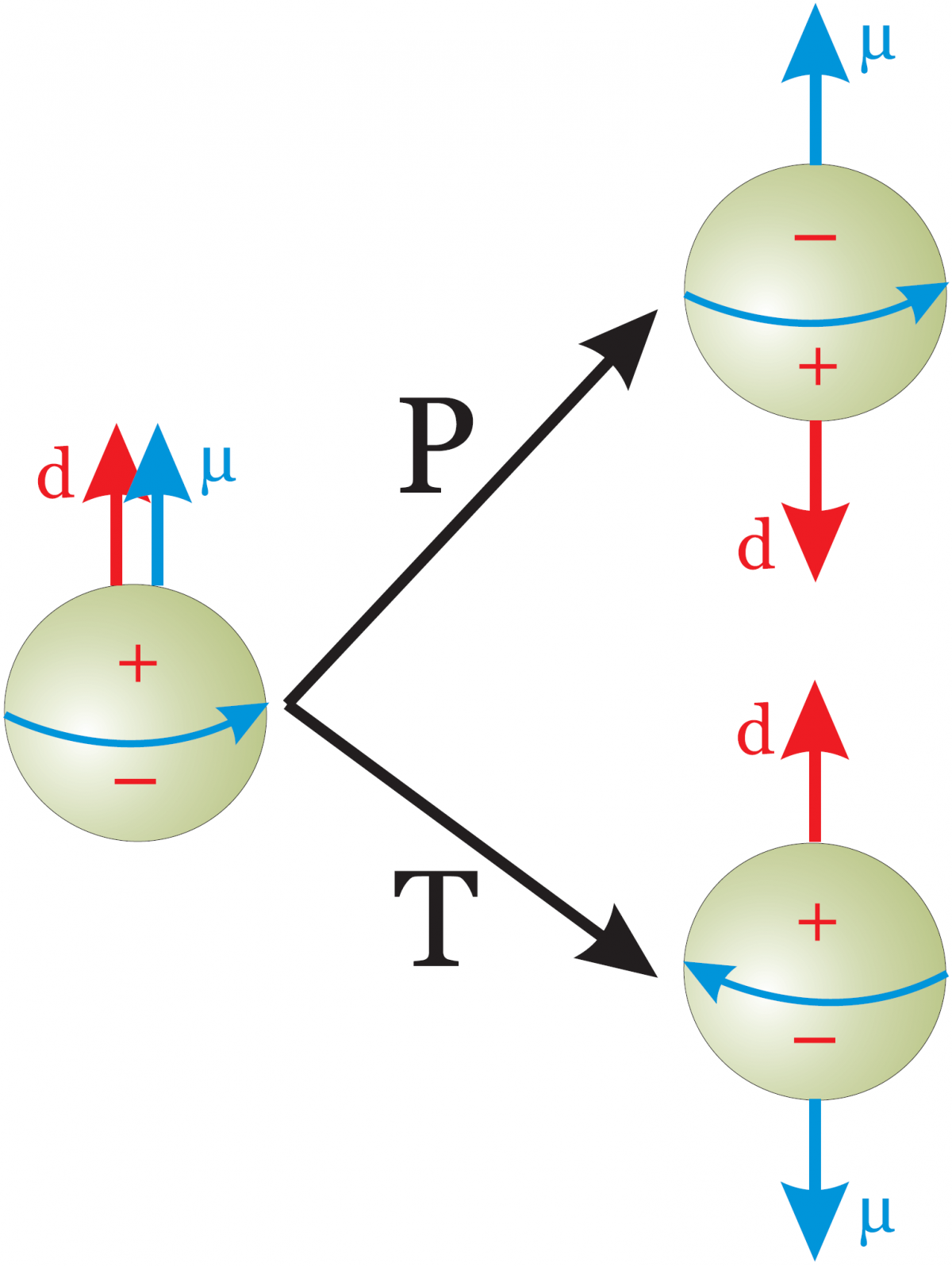
A neutron electric dipole moment would violate parity (P) and time-reversal (T) symmetries.
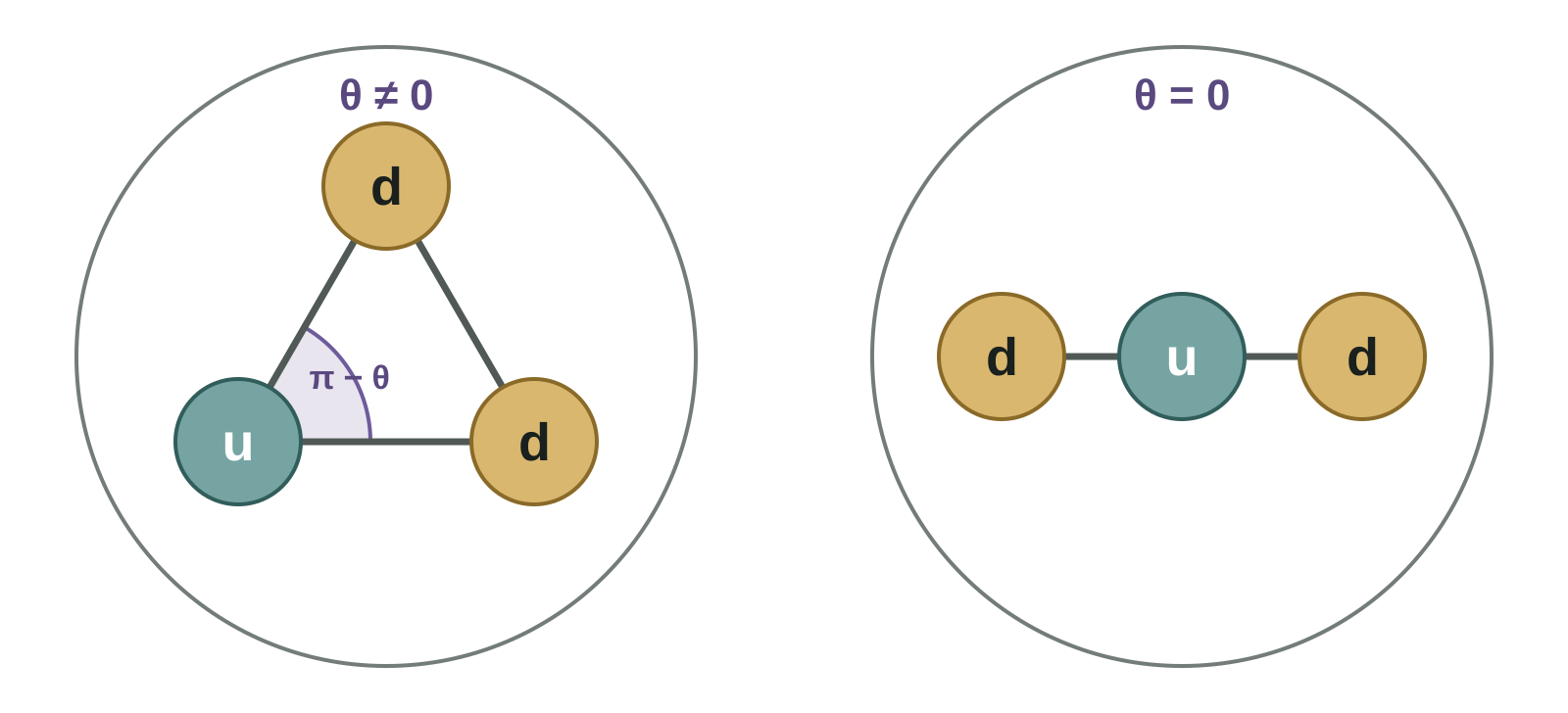
Conceptual representation of the strong CP angle: a generic configuration with θ ≠ 0 and the CP-conserving limit θ = 0.
Axions
Axions are hypothetical particles that could solve two major puzzles at once: why the strong interactions preserve CP symmetry and what constitutes the dark matter permeating the Universe.
My research seeks to identify the most promising ways to discover the QCD axion through collider experiments, tabletop measurements, and astrophysical observations.
Recently, I've developed new strategies that use stars, supernovae, and neutron stars as natural laboratories for fundamental physics. These extreme environments can produce axions in ways that cannot be replicated on Earth, creating distinctive signals that complement conventional searches.
This approach led my colleagues and me to propose GALAXIS, an experiment now under development that will use a network of gamma-ray satellites to search for axions produced by supernovae.
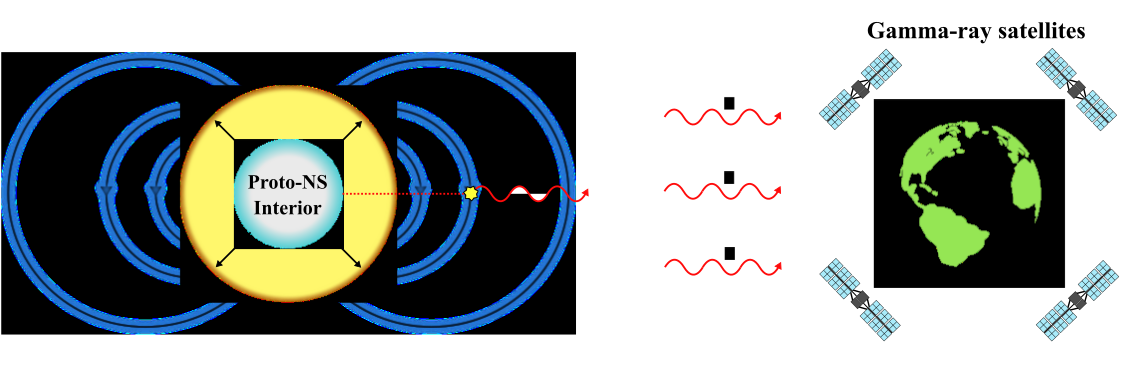
Conceptual schematic of GALAXIS (GALactic AXion Instrument for Supernovae).
Supernova explosion simulation.
The Origin of Flavor and CP Violation
Our current theory describes the fundamental building blocks of matter with remarkable precision, yet it does not explain why they possess the masses, interactions, and patterns that we observe.
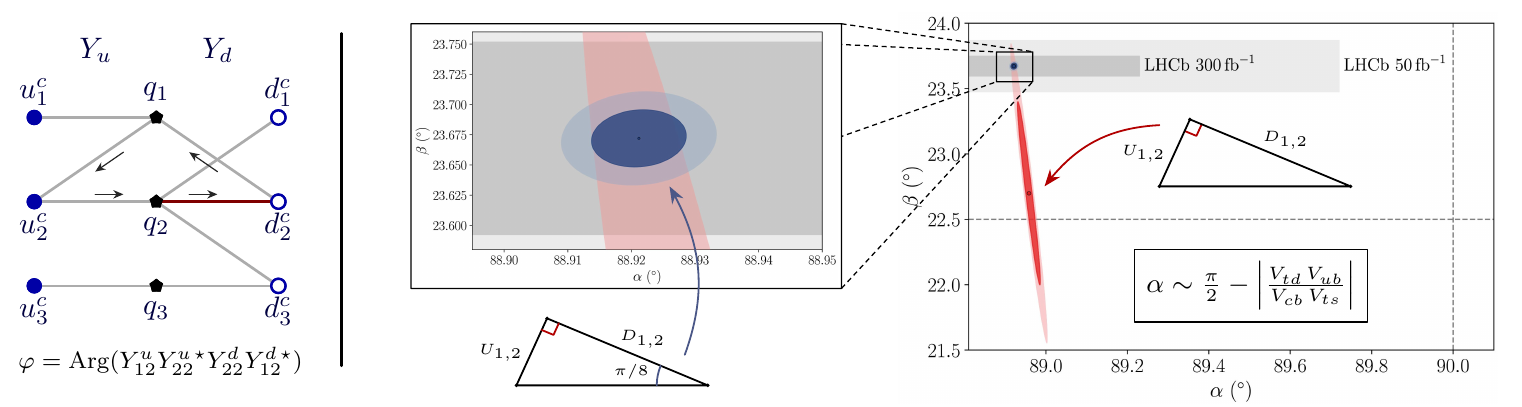
Why does matter appear in three generations? What produces the enormous differences among particle masses and mixings? What gives neutrinos their tiny masses, and what is the origin of the CP violation we observe? Together, these questions form the “flavor puzzle”—one of the deepest unresolved problems in particle physics.
My research searches for simple organizing principles behind this apparent complexity. The goal is to replace parameters that our current theory treats as unrelated inputs with a more fundamental and predictive understanding of the structure of matter.
A central ambition of this work is to show that the origin of flavor need not remain hidden at inaccessible energies. It may leave distinctive signatures that bring this deeper structure within experimental reach.
Dark Matter
Most of the matter in the Universe is made of something we have yet to identify. Discovering its nature would transform our understanding of both the cosmos and its fundamental ingredients.
My research approaches this mystery from theory to observation: identifying compelling dark-matter candidates, determining their distinctive signatures, and developing strategies to discover them. As experiments such as XENONnT, LZ, SuperCDMS, and DarkSide extend their sensitivity into unexplored territory, well-defined theoretical targets are essential for guiding searches and interpreting their results.
A central theme of my work is that dark matter may be connected to other fundamental puzzles rather than existing in isolation. I investigate frameworks inspired by other fundamental open questions in physics, asking how a common underlying theory could determine the properties and interactions of dark matter. I then combine evidence from colliders, tabletop experiments, astrophysical systems, and cosmological observations to test these ideas across an exceptionally broad range of environments.